Mountain Climbing
Ethiopia's high peaks
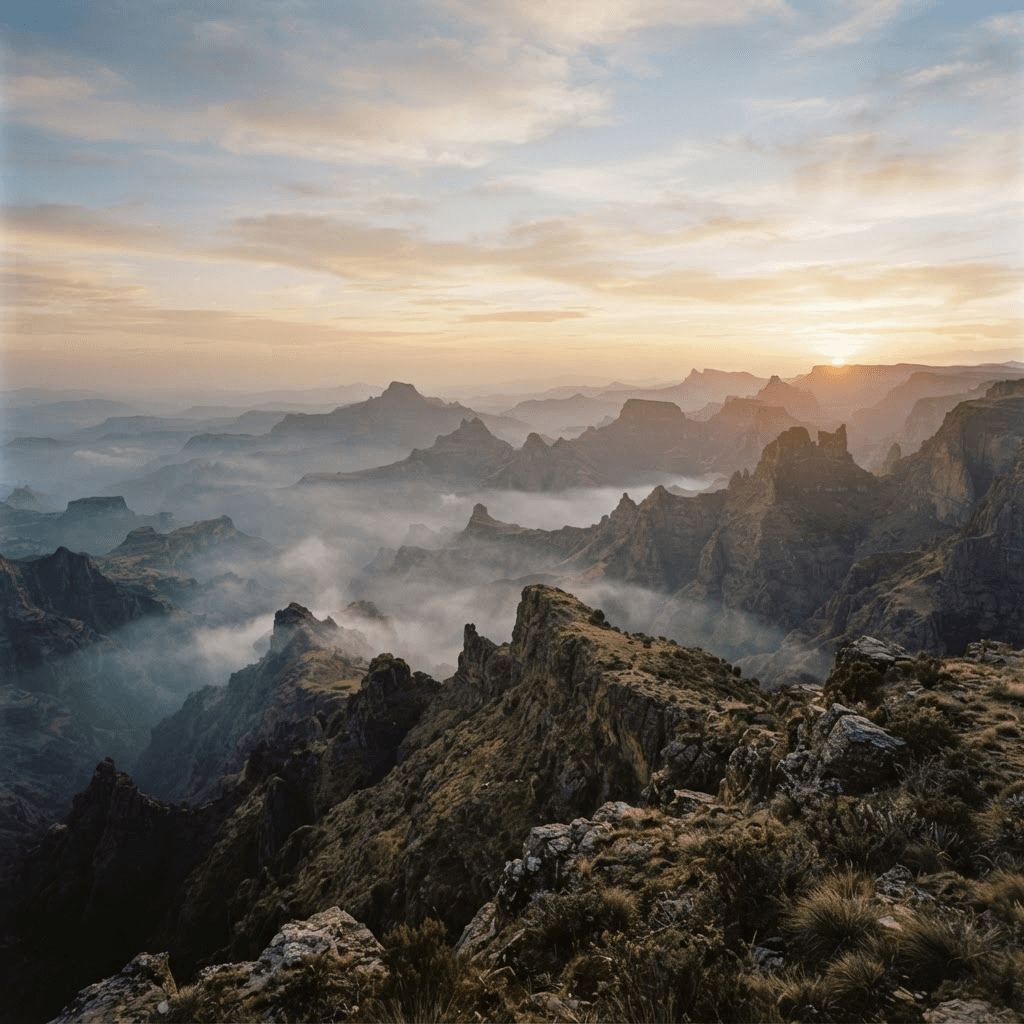
Summits above 4,000 metres on the Ethiopian Highlands, the largest continuous area of high ground in Africa — peaks you can walk to, guided by people who know them intimately.
Why Climb Here
Big summits, no ropes, and almost no crowds
Ethiopia's highest mountains are walking peaks. None needs ropes or technical skill — what makes them serious is altitude, distance and weather. With good acclimatisation, a fit walker can stand on Ras Dashen at 4,550 metres, the highest point in the country.
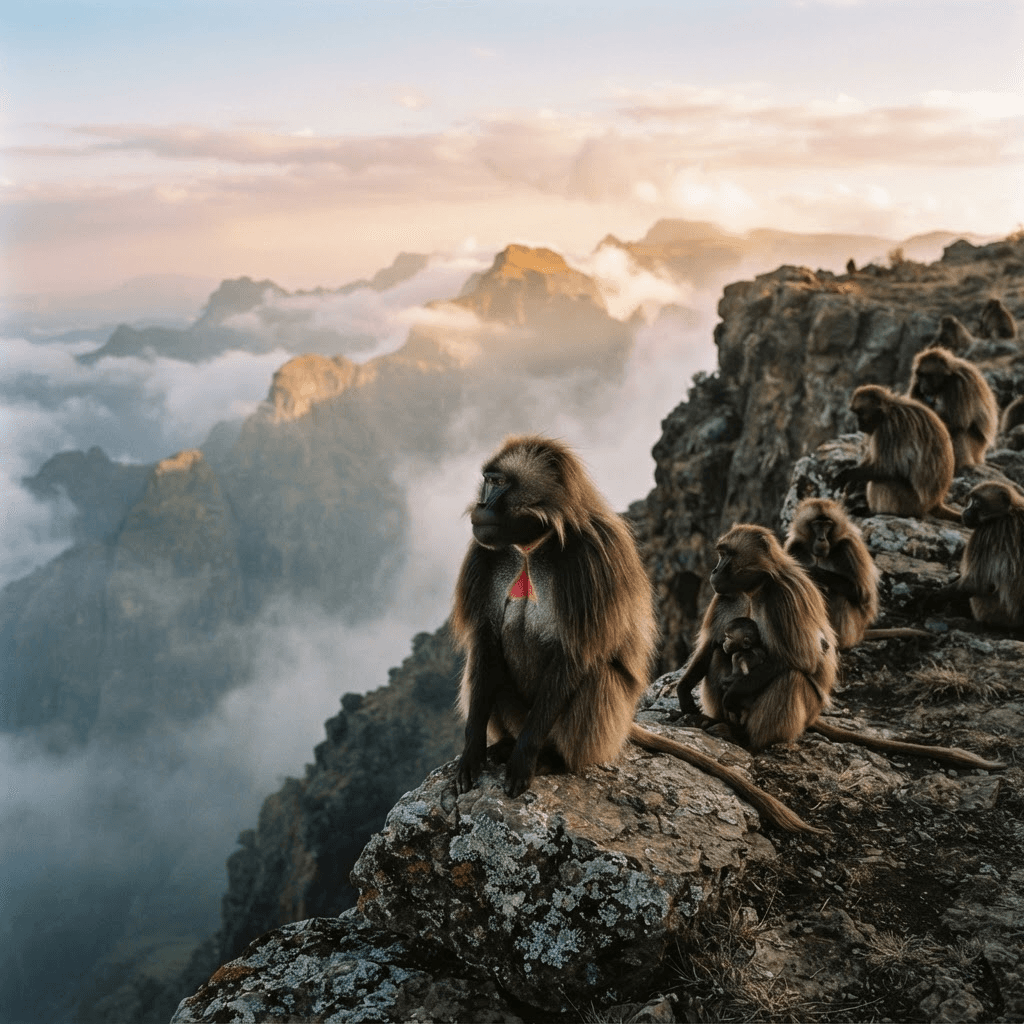
And you will rarely share the top. The approaches cross farmland, river valleys and Afro-alpine moorland where gelada monkeys, walia ibex and Ethiopian wolves live — mountains with a landscape, and a culture, all the way up.
- Highest summit
- 4,550 m
- Summits over 4,000 m
- 7 in this guide
- Main ranges
- Simien & Bale
- Climbing season
- Oct – Feb
The Summits
From half-day warm-ups to Ethiopia's highest point
Ras Dashen
Simien Mountains
Ethiopia's highest summit, reached from the base camp at Ambiko after crossing the Mesheha valley. A scramble to the top, not a technical climb.
4,550 m
Strenuous
7 – 10 days
Oct – Feb
Bwahit
Simien Mountains
A full day up from Chenek past the 4,200-metre Bwahit pass, with the first view of Ras Dashen and a good chance of walia ibex.
4,430 m
Challenging
1 day from Chenek
Oct – Feb
Tullu Dimtu
Bale Mountains
The high point of the Sanetti Plateau, walked across open moorland — a rough road also climbs close to the top, so it suits mixed-ability groups.
4,377 m
Moderate
1 day on the Sanetti Plateau
Nov – Mar
Batu
Bale Mountains
Reached on foot from Dinsho through the Web and Wasema valleys. Of its two peaks, "Little Batu" is actually the higher.
4,307 m
Challenging
5 – 7 days
Nov – Mar
Abune Yosef
Lasta Highlands
A remote massif about 40 kilometres from Lalibela, with community lodges, gelada monkeys and a chance of Ethiopian wolves.
4,260 m
Challenging
3 – 4 days
Oct – Mar
Guna
South Gondar
A broad Afro-alpine summit reached from a ridge at around 3,700 metres, past two false summits to a distinct rocky top.
4,120 m
Moderate
1 day from Debre Tabor
Oct – Feb
Choke
Gojjam
The moorland source of dozens of Blue Nile tributaries, walked village to village with a community ecovillage. Summits rise above 4,000 metres.
4,000 m+
Moderate
3 – 5 days
Oct – Feb
Wechecha
Near Addis Ababa
A warm-up summit above the ancient Menagesha forest, an hour from the capital — ideal for acclimatising before a bigger climb.
3,385 m
Easy
Half a day
Oct – May
Zuqualla
Near Addis Ababa
A holy volcanic summit south-east of the capital, with a crater lake and monastery at the top.
3,010 m
Easy
Half a day
Oct – May
Heights follow commonly cited figures; published sources differ by a few metres for some peaks, and by more for Choke, whose summits exceed 4,000 metres.
How We Run Climbs
Three ways to reach the top
Small-group departures
Join other climbers on set dates for Ras Dashen and Abune Yosef — shared crews, lower cost, same senior guides.
Ras Dashen Summit ClimbPrivate climbs
Every ascent can run privately on your dates, at your pace, with your own guide, scout, cook and mule team.
Bale Summits: Batu & Tullu DimtuClimbing in comfort
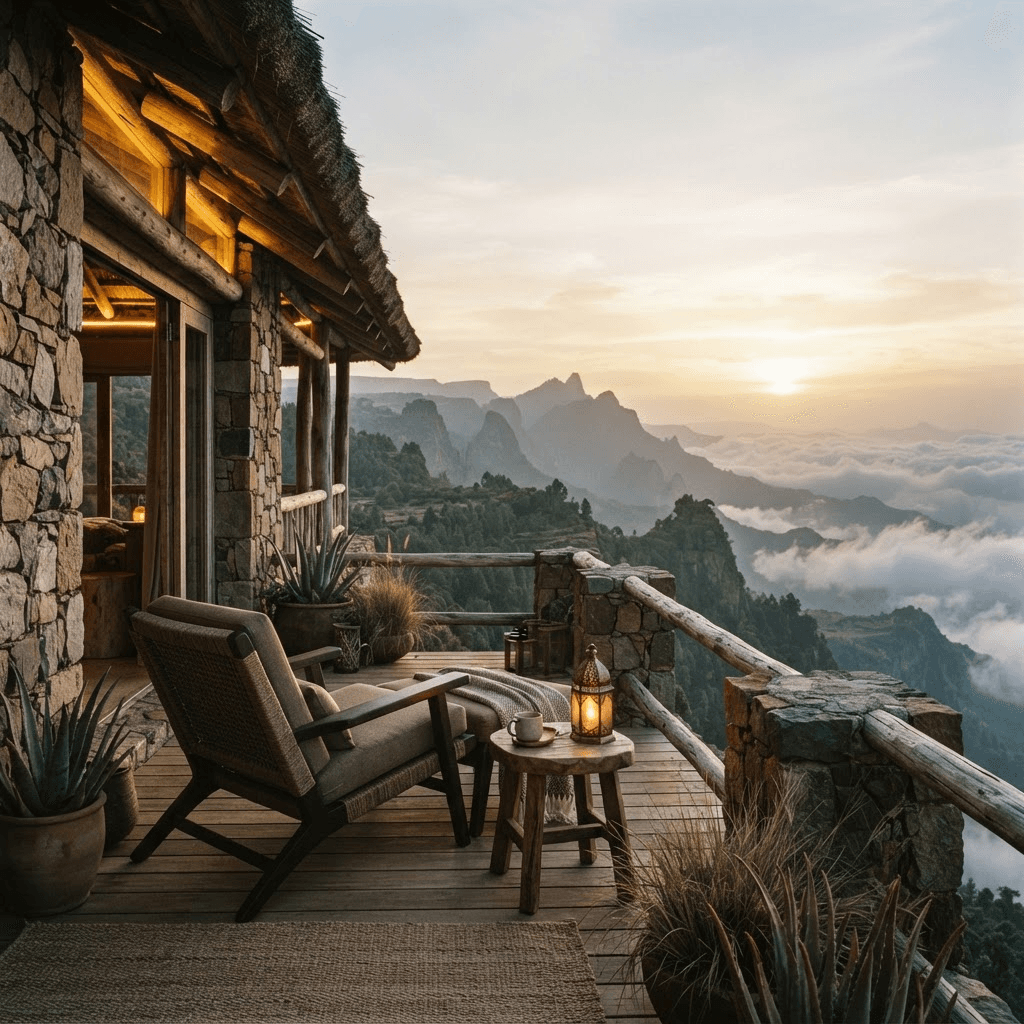
Lodge-supported summits with a vehicle to every trailhead and a hot shower each night — the altitude without the tents.
Simien Summits in ComfortBefore You Climb
Altitude is the real challenge — here is how we handle it
Acclimatisation first
Every climb gains height gradually and builds in rest. Warm-up summits near Addis — Wechecha and Zuqualla — are a good start.
Checked every morning
Guides carry a pulse oximeter and first-aid kit, and check oxygen saturation daily above 3,500 metres.
We turn around
If the altitude, weather or your body says stop, we stop. No summit is worth a serious illness, and the decision is never negotiable on the day.
Insured properly
Travel insurance with medical evacuation cover is required on every climb, and we may ask to see it before departure.
The right season
October to February is the climbing season. The long rains, roughly June to September, make the high trails slippery and cloud-bound.
Guided Ascents
Climbing journeys
Speak With a Designer
Not sure which summit suits you?
Tell us your walking experience, how you handle altitude, and how many days you have. A designer will suggest the climb — and the acclimatisation — that fits.
Or call us directly on +1909-450-7246